Power Flush in CreditonSludge out, radiators hot again, from £350, 12-month guarantee
One engineer, based in Stoke Canon just north of Exeter. You ring, I answer, I turn up. Monday to Friday, 8am to 5pm.
Power flushing in Crediton at a glance
4.6/5 from 59 Google reviews
- Gas work with P Harman, Gas Safe registered; OFTEC trained
- £110 callout incl. first hour; booked work £60/hr
- Exeter and mid Devon, honest travel times
- Mon–Fri 8am–5pm, out-of-hours by arrangement
How I power flush a heating system in Crediton
If your radiators are cold at the bottom, take an age to warm up, or the boiler bangs and kettles, the system is almost certainly full of sludge: the black iron oxide that forms inside radiators and pipes over years. A power flush pumps cleaning chemicals round at high flow, radiator by radiator, until the water runs clear, then inhibitor goes in and a magnetic filter stops it building up again. I'm based in Stoke Canon, about 20 minutes from Crediton, and cover Sandford, Shobrooke, Newton St Cyres and the villages around.
Power flush problems I fix in Crediton
Signs you need one
Radiators cold at the bottom, some rooms never warm, boiler noisy, pump or valve failures every winter, dirty black water when you bleed a radiator.
What I do
Connect the flushing pump, dose the system, work round every radiator with agitation and reverse flow, dump the sludge to drain, flush to clear, add inhibitor, fit a magnetic filter, re-balance.
How long
Most of a day for a typical house: four to six hours for eight radiators. You can be in or out, but I need the water and heating off while I work.
Guarantee
12 months on the flush, in writing. If sludge symptoms come back inside a year on a system I have flushed, I come back.
Before a new boiler
Every manufacturer requires a clean system for the warranty. A flush and filter before the install protects the new heat exchanger from day one.
Not always the answer
If radiators are pinholing or the pump is dead, a flush will not save them. I tell you that on the survey rather than take the money.
What Crediton customers say when they ring about a power flush
Nobody rings to ask for a power flush. They ring and say one of these. Each one usually means the same thing.
"The radiators are hot at the top and cold at the bottom."
Sludge lying along the bottom of the radiator. Bleeding will not shift it.
"Upstairs gets warm, downstairs never does." / "The far bedroom is always cold."
Flow is being choked on the longest runs. Partly balancing, mostly sludge in the pipes.
"It takes an hour to warm the house up."
The boiler is working, the heat is not getting through. Classic sludged system.
"The boiler bangs and rumbles like a kettle."
Kettling: deposits on the heat exchanger making the water boil locally. A flush normally cures it.
"Black water came out when I bled a radiator."
That is the sludge. Clean system water is clear or faintly coloured by inhibitor.
"We keep replacing the pump." / "The valves keep sticking."
Sludge wears pumps and jams motorised valves. Replacing them without flushing means replacing them again.
"The boiler fitter says we need a flush before the new boiler."
They are right. The warranty depends on it, and so does the new heat exchanger.
"The bills have gone up but the house is no warmer."
A sludged system makes the boiler run longer for the same heat. Flushing typically brings it back.
Crediton and mid Devon houses
Victorian and Edwardian terraces in Crediton town, Sandford and the older village centres: heating systems that have been extended and altered over decades, often with a mix of old steel pipe, original column or panel radiators and a boiler that is the third or fourth on the system. These hold a lot of sludge and they respond very well to a flush, but they also have the highest chance of a tired radiator showing a pinhole afterwards, so I check every one first.
1930s to 1960s semis in Crediton, Newton St Cyres and Bow: usually one open-vented system fitted in the 70s or 80s, a feed tank in the loft, and years of fresh oxygenated water topping up through it. Oxygen plus steel radiators equals black oxide. These are the bread and butter of power flushing round Exeter.
Microbore systems in later estates, the later estates on the edge of Crediton: 8mm and 10mm pipe that blocks solid with very little sludge. A power flush has to be done radiator by radiator with the pipework in mind, and sometimes a blocked run needs clearing individually. I will tell you if your system is microbore before I quote.
New-builds on the newer developments around Crediton: not old enough for corrosion sludge, but installation debris, flux and swarf left in the system at build, and inhibitor that was never dosed. A flush at the first service, with a filter, saves the boiler.
Oil-fired systems across the villages round Crediton, where oil is the norm: the same as any other on the water side, and the Grant and Worcester boilers I service all benefit from a clean system. I combine a flush with an oil boiler service when it makes sense.
How a power flush day goes in Crediton
- Survey first. I look at every radiator, the pipework, the pump and the boiler, note which radiators are cold where, and photograph anything that looks weak. You get the price before anything is connected.
- Connect the flushing pump. Usually across the pump or at a radiator, with the system isolated from the mains. Dust sheets down; this is a wet job.
- Dose and circulate. A cleaning chemical goes in and circulates hot to loosen the sludge and scale.
- Radiator by radiator. Each radiator is isolated in turn and flushed at high flow with the direction reversed, while I agitate it to knock the sludge off the inside. This is the part that takes the time and the part cheaper flushes skip.
- Dump and repeat. The black water goes to drain and clean water goes in, until what comes out runs clear. I show you the before and after in a jar.
- Neutralise, inhibit, filter. The chemical is neutralised and flushed out, the correct dose of inhibitor goes in, and a magnetic filter is fitted on the return to catch anything that is left.
- Balance and test. Every radiator set so the whole house heats evenly, the boiler run up and checked, and you get a written record of what was done and the guarantee.
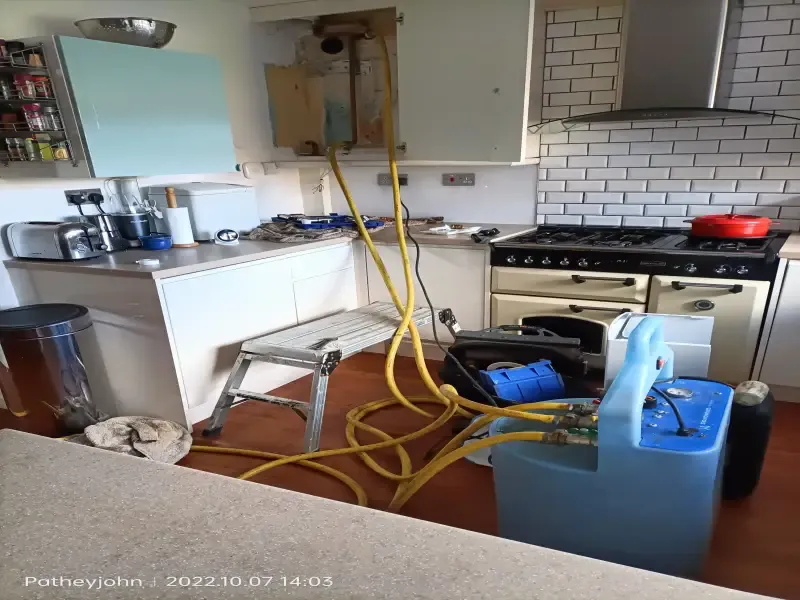
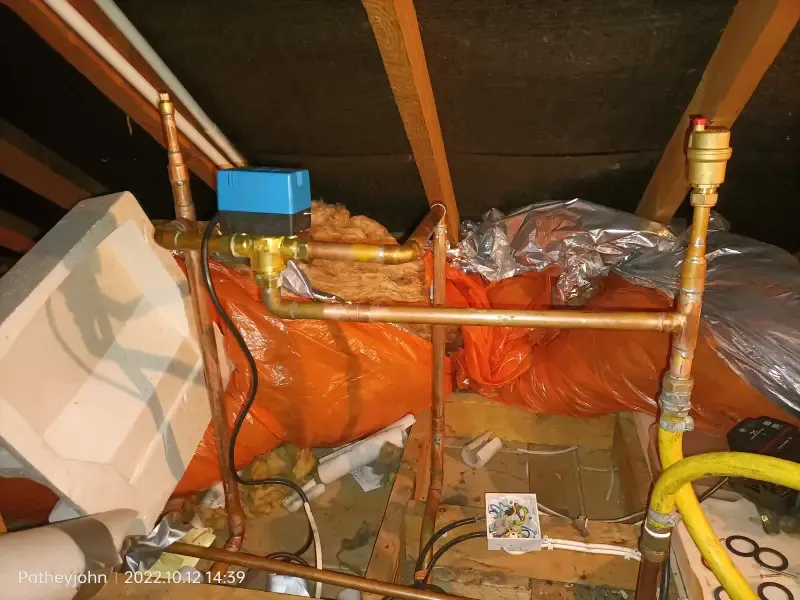
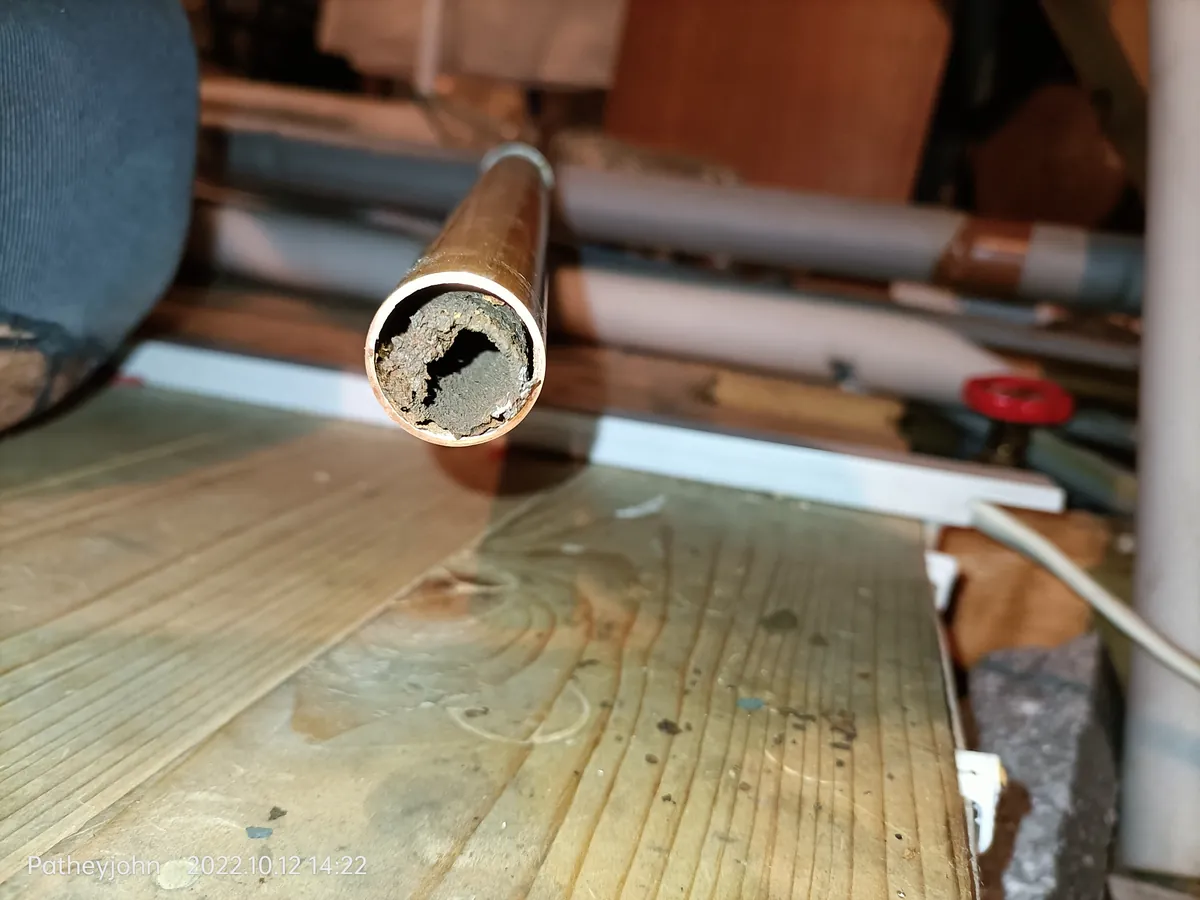
What actually comes out of a mid Devon heating system
These are from my own jobs around Exeter and Crediton, not stock photos. This is the black iron oxide sludge that stops radiators heating and wears out pumps.
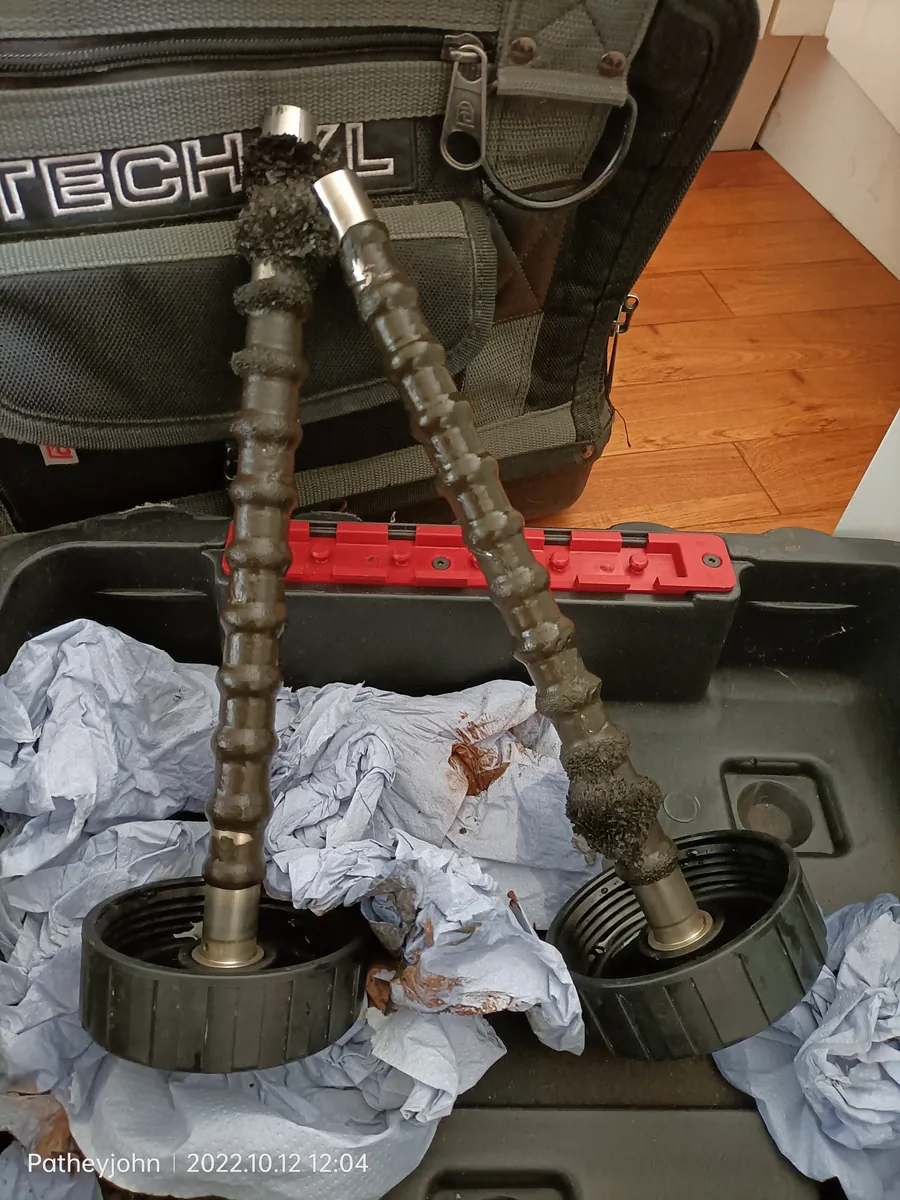
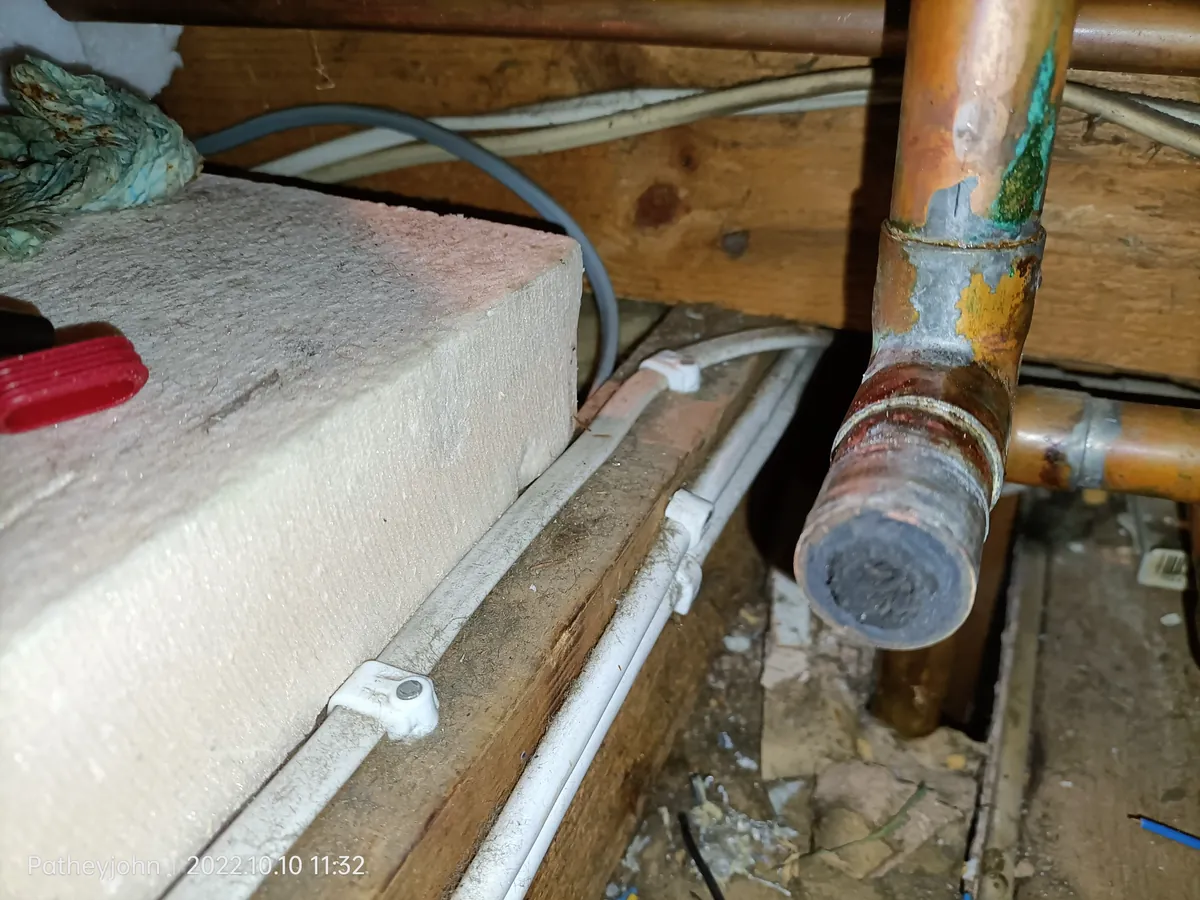
When a power flush is not the answer
A power flush is £350 or more of your money, so I only recommend it when it will work. I will say no, or suggest something cheaper, when:
- Radiators are already weeping or pinholing. Flushing exposes the holes; those radiators need replacing first or instead.
- The problem is one cold radiator, not the system. A single radiator can be taken off and flushed outside for a fraction of the cost.
- The pump is dead or a valve has failed. That is a repair, not a flush, even if sludge caused it.
- The system is so far gone that a chemical clean over a few weeks, then a drain down, is the kinder route.
- The boiler fault is not sludge at all. Kettling is; a lockout, a pressure drop or a fan noise is not.
Most of what I am asked to flush does need it. But a quick read of the signs before you ring will tell you which camp you are in.
Power flush prices in Crediton
Parts are priced before they're fitted. No evening or weekend premium slipped onto the bill.
Power flush questions from Crediton customers
How much does a power flush cost in Crediton?
From £350 for a typical house with up to about eight radiators, including the chemicals and inhibitor. About £30 for each radiator beyond that, quoted exactly once I know the radiator count and boiler type. A magnetic filter is £120 to £200 fitted.
Why is my radiator cold at the bottom but hot at the top?
Sludge. It is heavier than water and settles along the bottom of the radiator, so hot water passes over it and the bottom stays cold. Bleeding will not shift it because it is not air. A flush clears it; a badly sludged single radiator can sometimes be removed and flushed on its own.
Can I just bleed the radiators instead?
Bleeding fixes radiators that are cold at the top, which is trapped air. Cold at the bottom, slow warm-up and black water when you bleed are sludge, and bleeding does nothing for those.
Will a power flush damage old radiators?
A sound radiator is fine. One already weeping or pinholing from corrosion can start leaking once the sludge that was plugging the holes is removed. I check every radiator before I start and tell you which ones are at risk.
Do I need a power flush with a new boiler?
Boiler manufacturers require the system to be cleaned and a filter fitted for the warranty to stand. If the old system is sludged, yes, and it is far cheaper than a new heat exchanger in three years.
How long does it take and do I need to be in?
Four to six hours for a typical eight-radiator house, longer for bigger systems. You need to let me in and the heating and hot water are off while I work. You do not need to stay.
Will it fix my noisy boiler?
If the noise is kettling, a rumbling or banging as the boiler heats up, it is usually scale and sludge on the heat exchanger, and a flush normally cures it. If the noise is the pump or a fan, that is a different fault and I will say so.
How often does a system need flushing?
Once, if it is then kept dosed with inhibitor and has a filter that gets cleaned at each service. Systems that are flushed and then neglected sludge up again within a few years.
Are you Gas Safe registered?
The flush itself is not gas work. Where a job involves the gas boiler, P Harman, a Gas Safe registered engineer, carries out and signs off that part. Oil boilers I handle myself.
When can you come?
Monday to Friday, 8am to 5pm. Ring and I will give you an honest date; a flush is a booked day, not an emergency call.
Related
Power Flush in Crediton: ring me
I'll tell you honestly what it needs and when I can come.
Call 07766 501664