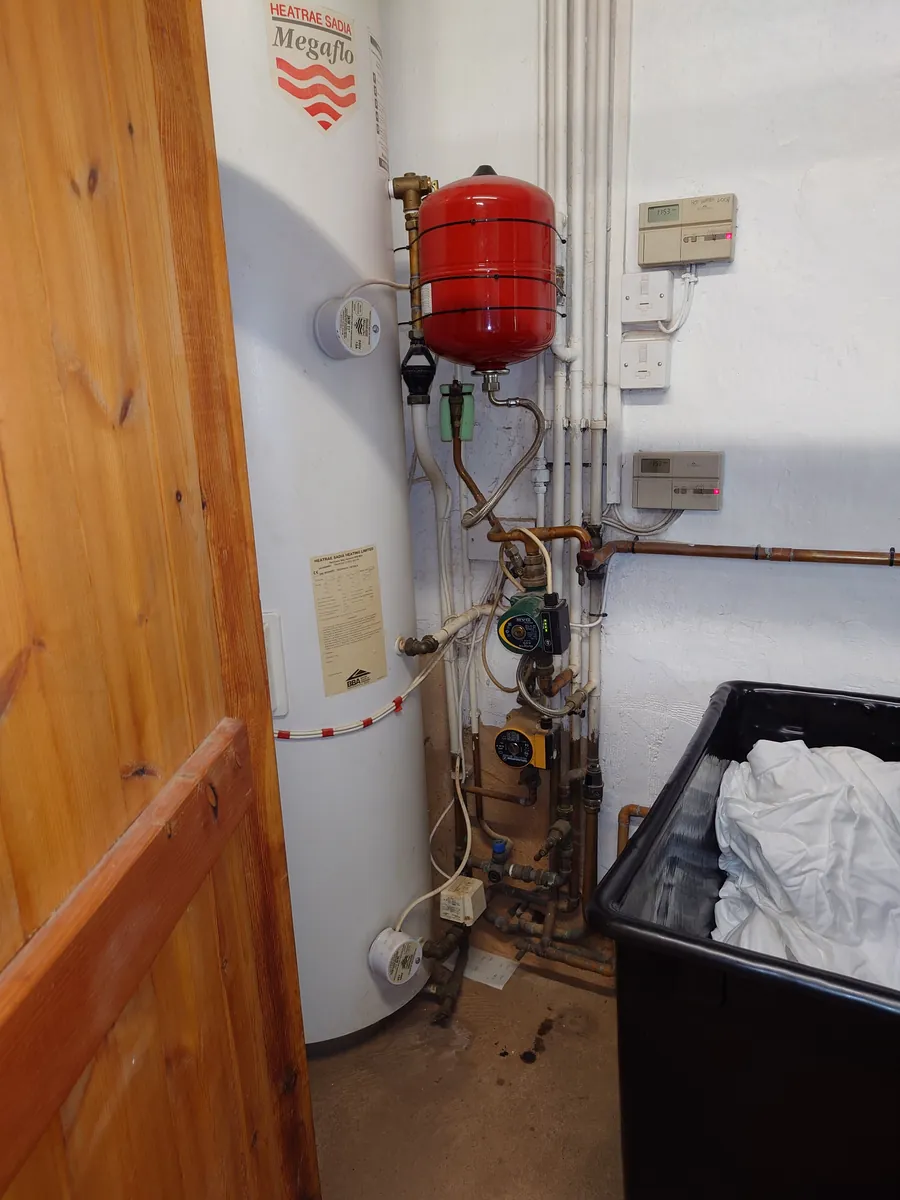
Heatrae Sadia is one of the leading manufacturers of unvented hot water cylinders in the UK, with their Megaflo range being particularly popular in homes across Devon and Exeter. While these systems are known for their reliability and efficiency, one common issue that homeowners encounter is water discharging from the tundish. This comprehensive guide explains the causes, symptoms, and professional solutions for tundish discharge problems in Heatrae Sadia unvented hot water cylinders.
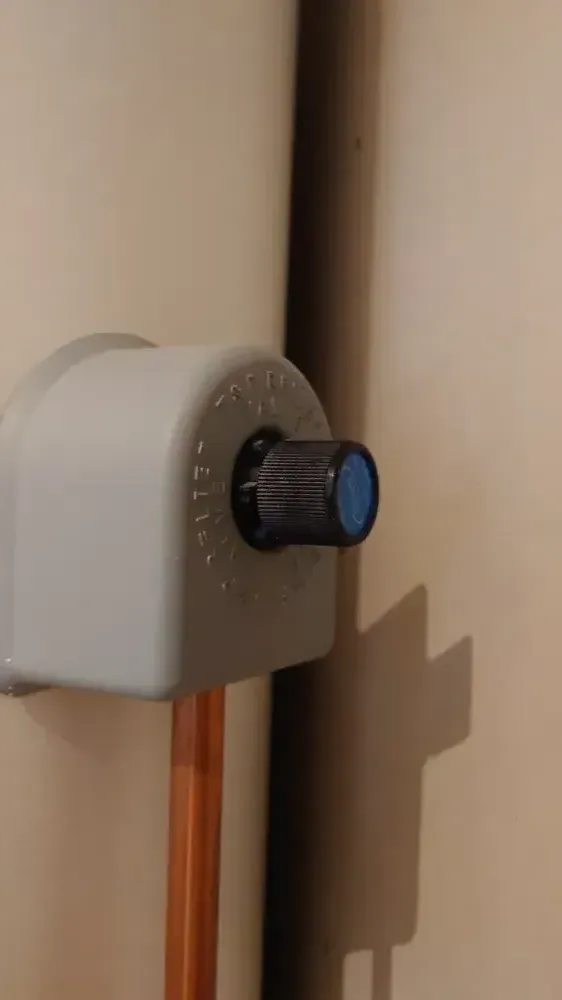
Temperature and pressure relief valve on a Heatrae Sadia cylinder - the common source of tundish discharge problems
What is a Tundish and Why is it Important?
A tundish is a safety device installed on unvented hot water cylinders that provides a visible air gap between the cylinder's discharge pipes and the building's drainage system. Its primary purpose is twofold:
- Safety indicator: It allows you to see if water is being discharged from either the temperature relief valve or pressure relief valve
- Backflow prevention: It prevents contamination of the potable water supply by maintaining an air gap between the discharge and drainage
The tundish is typically a clear plastic or chrome fitting installed in a visible location near the cylinder. When functioning correctly, it should remain dry with no water passing through it. Any water discharging from the tundish indicates a problem with the hot water system that requires attention.
The Importance of the Tundish
Building regulations (G3) require a tundish to be fitted to all unvented hot water cylinders as an essential safety feature. It provides:
- Visual indication of relief valve operation
- Protection against backflow contamination
- Compliance with water regulations
- Early warning of system problems
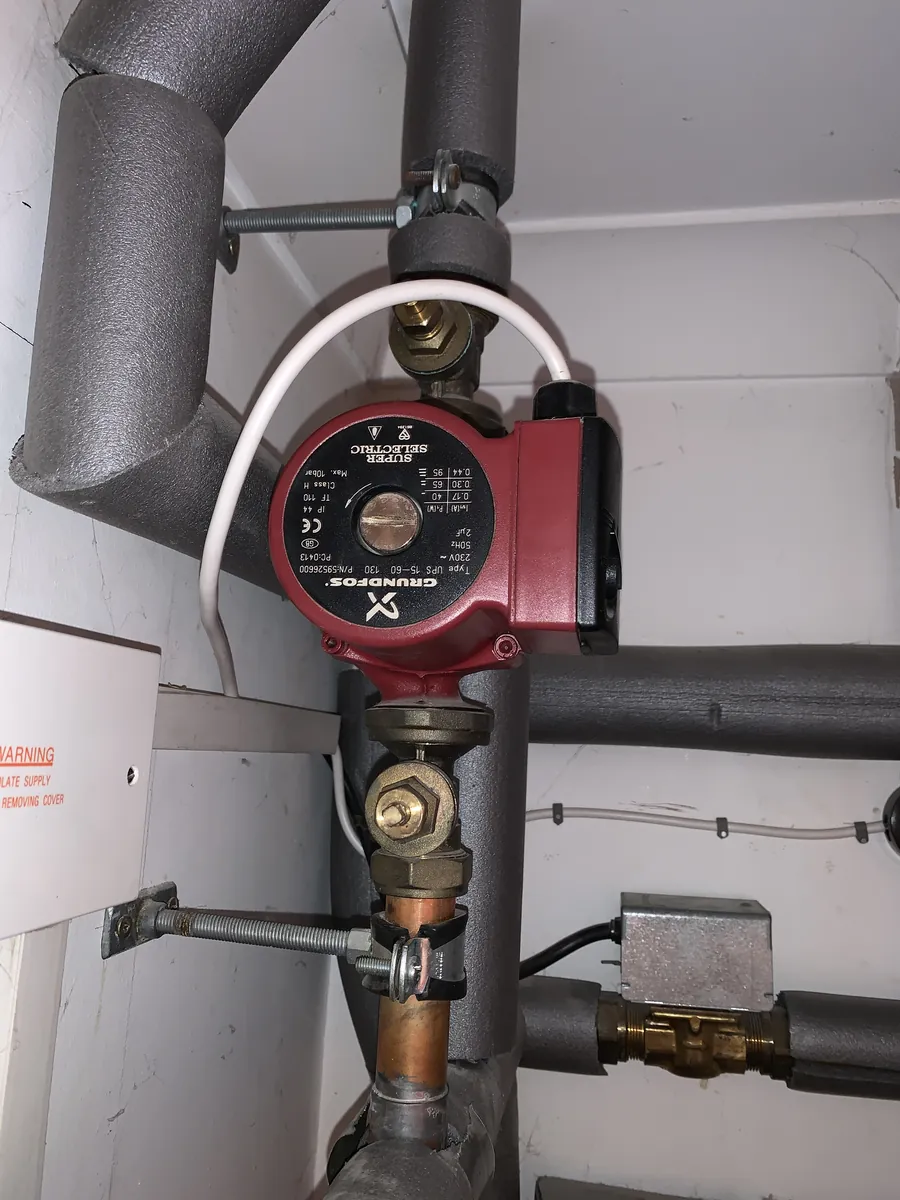
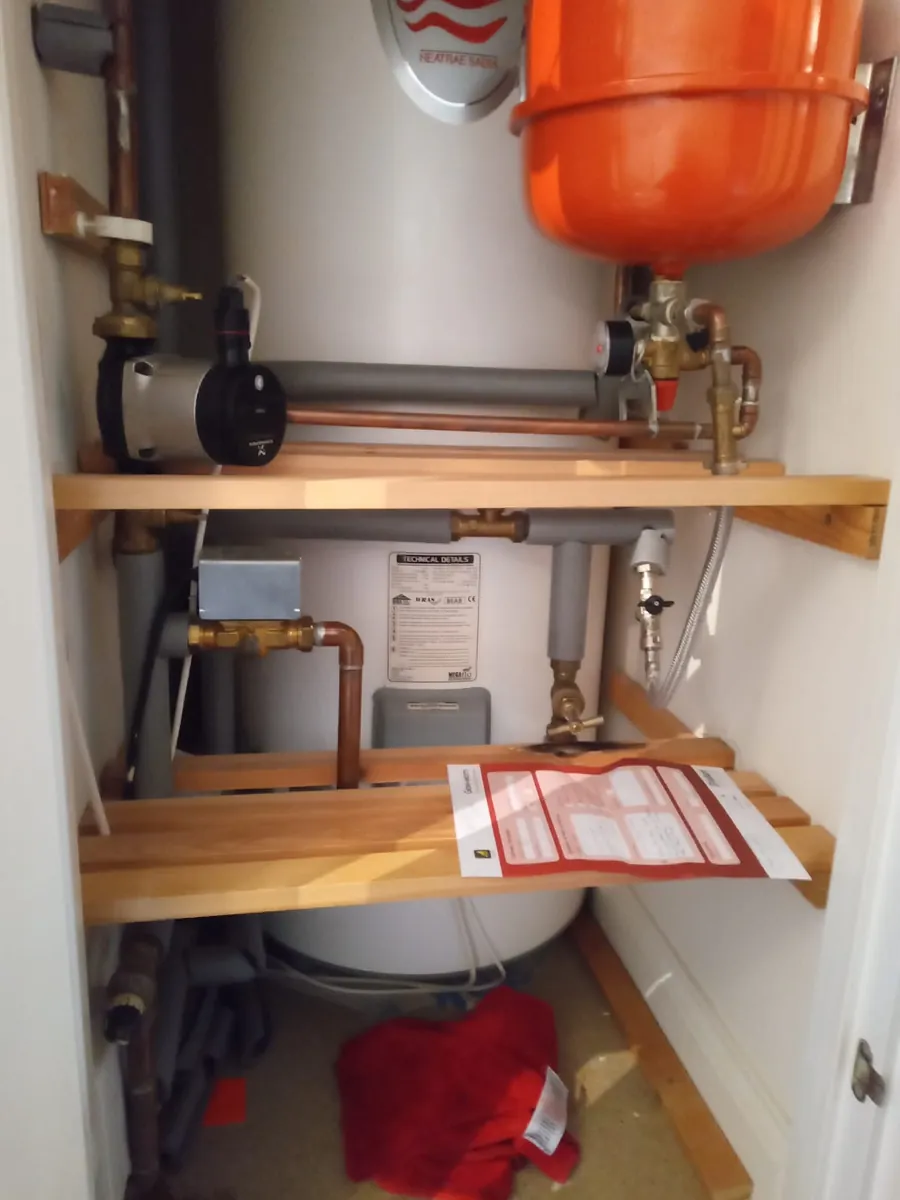
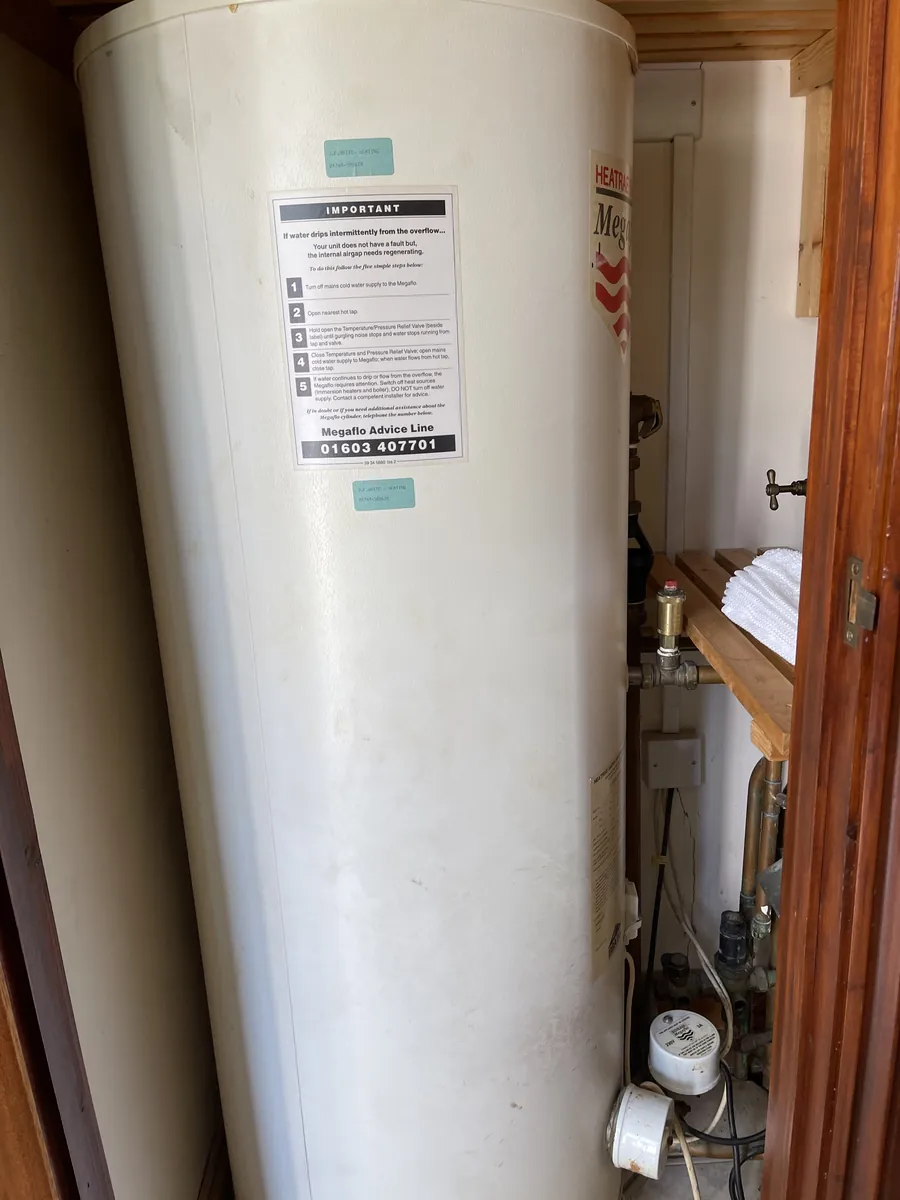
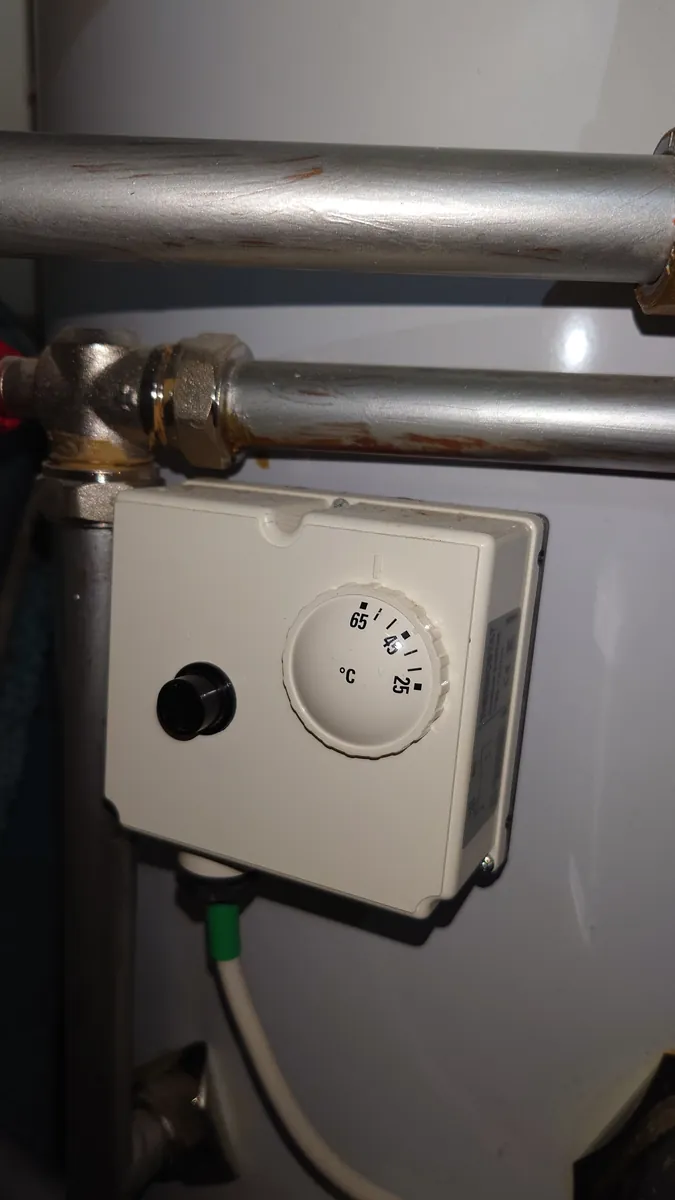
From my own jobs
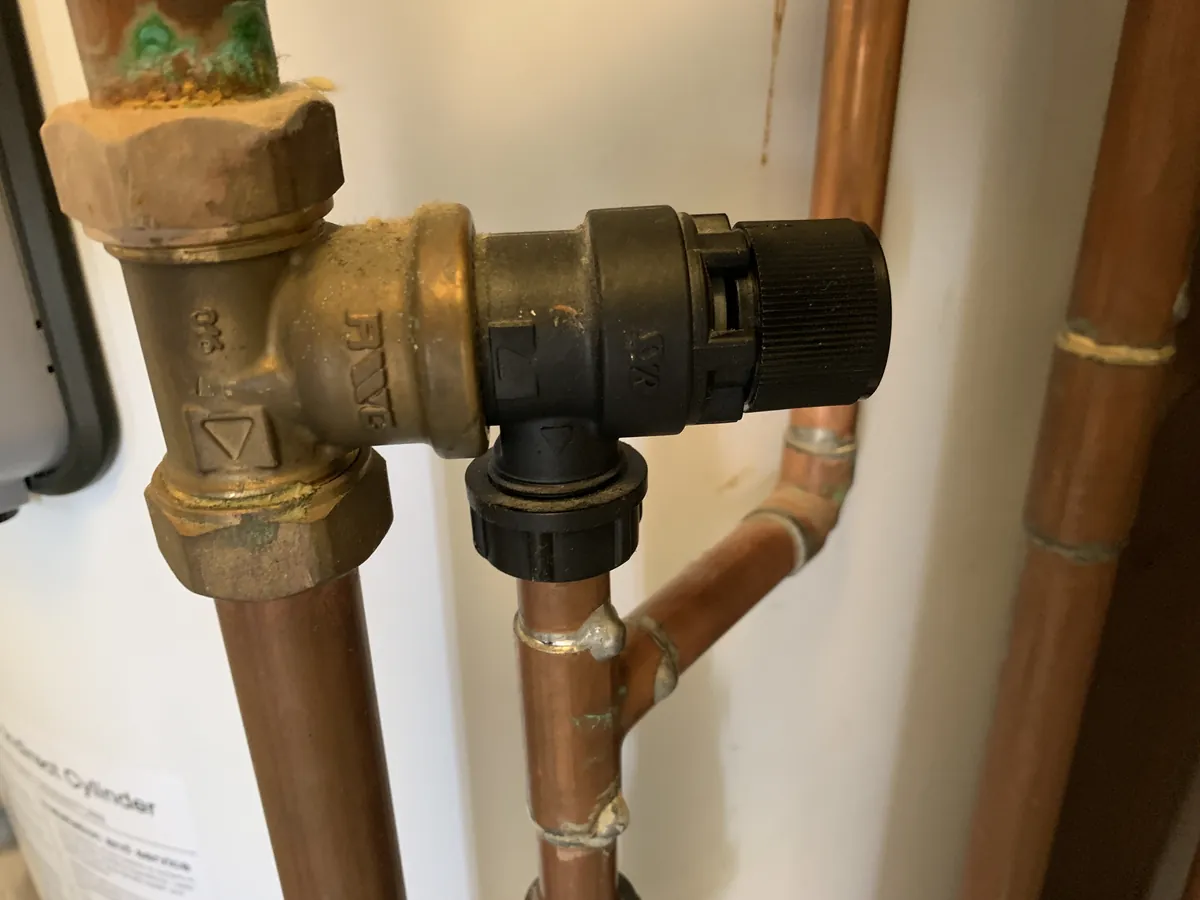
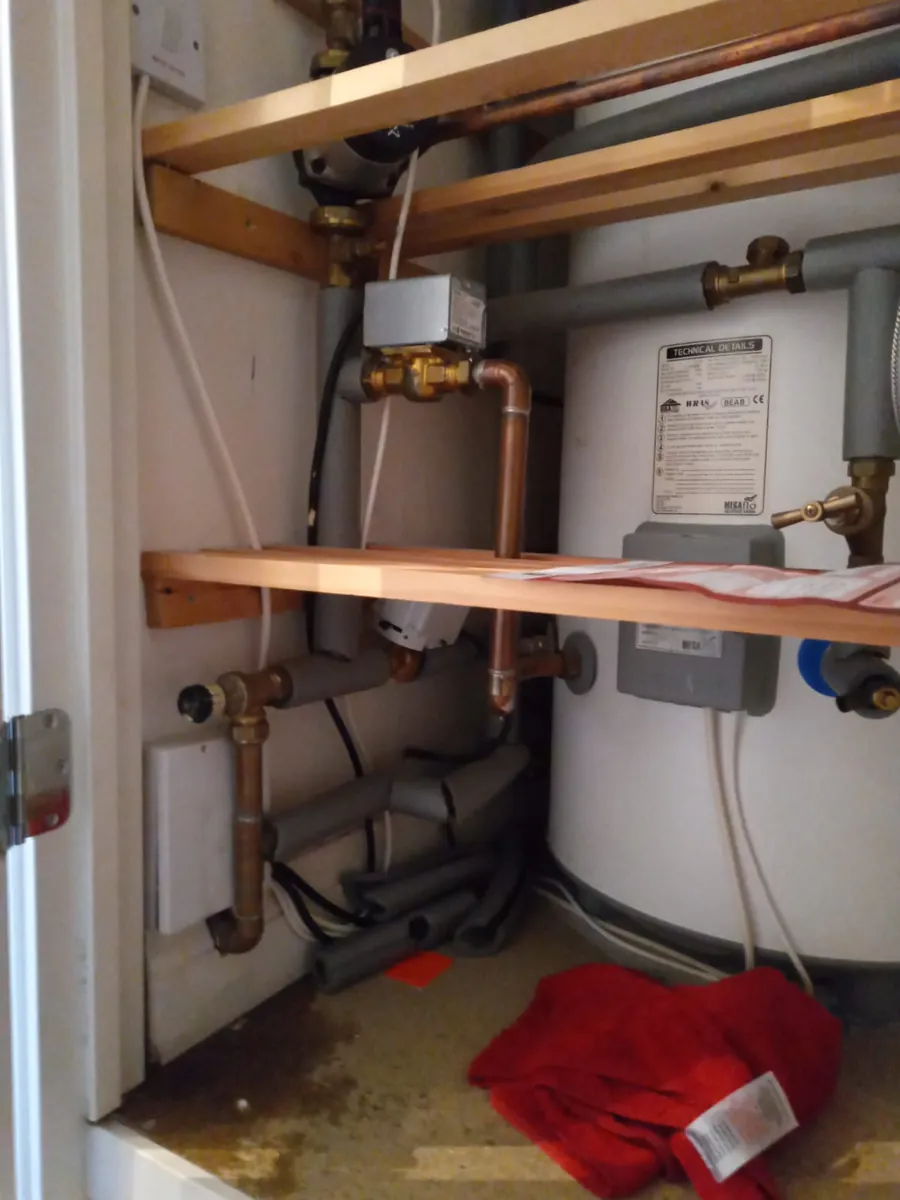
Common Causes of Water Discharging into the Tundish
When water appears in the tundish of your Heatrae Sadia unvented cylinder, it typically indicates that one of the safety valves is operating. Here are the most common causes our Exeter plumbing technicians encounter:
1. Expansion Vessel Issues
The expansion vessel absorbs excess pressure created when water heats up and expands. Common problems include:
- Loss of pre-charge pressure in the expansion vessel
- Damaged internal membrane
- Incorrect sizing for the system
- Waterlogged vessel
2. Pressure Reducing Valve Failure
The pressure reducing valve (PRV) regulates the incoming water pressure to the cylinder. Issues include:
- Valve sticking or failing to reduce pressure effectively
- Internal components becoming worn or damaged
- Debris buildup preventing proper operation
- Incorrect pressure setting (should be 3 bar for most Megaflo systems)
3. Temperature and Pressure Relief Valve Issues
The temperature and pressure relief valve (T&P valve) is a critical safety device that opens when water temperature or pressure exceeds safe limits.
- Valve seating issues causing continuous dripping
- Scale buildup preventing proper sealing
- Thermostat failure causing overheating
- Damaged valve components
4. Check Valve/Non-Return Valve Issues
The check valve prevents hot water from flowing back into the cold water supply.
- Valve sticking in partially open position
- Scale or debris preventing complete closure
- Damaged internal components
- Incorrect installation orientation
Important Safety Note
Water discharging from the tundish is not just an inconvenience—it's a warning sign that your unvented cylinder's safety systems are operating. Never disable, block, or modify any safety valve or discharge pipe. These are essential safety features that prevent potentially dangerous pressure or temperature buildup.
In our experience with Devon properties, particularly in areas with hard water like parts of Exeter and East Devon, scale buildup is an extremely common factor in many tundish discharge issues. The mineral content in the water can accelerate wear on various components of the Heatrae Sadia system.
Symptoms and Diagnosis of Tundish Discharge Problems
Identifying the specific cause of tundish discharge requires careful observation and diagnostic procedures. Here are the key symptoms and diagnostic approaches I use when assessing Heatrae Sadia unvented cylinders:
Types of Discharge and What They Indicate
| Discharge Type | Likely Cause | Urgency Level |
|---|---|---|
| Continuous steady flow | Significant PRV failure or expansion vessel failure | High - Immediate attention required |
| Intermittent discharge during heating | Expansion vessel issues or scale on temperature relief valve | Medium - Schedule service soon |
| Small, occasional drips | Minor scale buildup on valve seats or slight pressure issues | Medium - Monitor and schedule service |
| Discharge during or after hot water use | Thermal expansion issues or check valve problems | Medium - Schedule assessment |
| Steaming hot discharge | Thermostat failure causing overheating | High - Immediate safety issue |
Professional Diagnostic Approach
When I diagnose tundish discharge problems, we follow a systematic approach:
- Visual inspection of all components and connections
- Pressure testing at various points in the system
- Checking expansion vessel pre-charge pressure
- Testing the operation of relief valves
- Inspection for scale buildup or debris
- Verification of thermostat operation and settings
- Assessment of incoming water pressure
What Homeowners Can Check
While professional diagnosis is recommended, there are some preliminary checks homeowners can safely perform:
- Note the pattern of discharge (continuous, intermittent, etc.)
- Check if discharge coincides with heating cycles
- Look for signs of recent plumbing work that might have affected the system
- Check if the boiler pressure gauge (if visible) shows normal readings
- Check water temperature at taps (excessively hot water could indicate a thermostat issue)
- Listen for unusual noises from the cylinder
Devon-Specific Considerations
In our experience servicing Heatrae Sadia systems throughout Devon, we've noted regional factors that affect diagnosis:
- Water hardness varies significantly across Devon, with harder water in East Devon particularly contributing to scale-related issues
- Properties in coastal areas like Exmouth and Sidmouth often experience accelerated corrosion in system components due to salt in the atmosphere
- Water pressure fluctuations are common in hillier parts of Exeter (particularly Pennsylvania and Heavitree), requiring more robust pressure management
- Older properties in central Exeter often have modified systems that require specialized diagnostic approaches
Low Hot Water Flow From Taps: Causes and Solutions in Exeter Homes
One of the most common complaints from homeowners in Exeter and surrounding Devon areas is low water flow or pressure from hot taps while cold taps work normally. This frustrating issue is often directly related to problems with your Heatrae Sadia unvented cylinder.
Common Causes of Low Hot Water Flow
Internal System Issues
- Scale buildup in heat exchanger - Common in hard water areas of Devon like Exeter and Exmouth
- Partially blocked strainers - Sediment accumulation restricting flow
- Faulty flow regulators - Incorrectly limiting water output
- Internal pipe restrictions - Limescale narrowing water pathways
- Thermal cut-out activation - Safety feature reducing flow
External Plumbing Factors
- Incorrectly sized pipework - Common in older Exeter properties
- Partially closed service valves - Restricting water supply
- Multiple outlet usage - System pressure drops when using multiple hot taps
- Water pressure fluctuations - Variable mains pressure affecting performance
- Shower mixer valve issues - Affecting hot water delivery
How Absolute Plumbing & Heating Fixes Low Hot Water Flow
I use a systematic approach to diagnose and fix low hot water flow issues in Heatrae Sadia unvented cylinders:
- Comprehensive system inspection - Checking all components from cylinder to taps
- Water pressure testing - Using calibrated gauges to measure pressure at different points
- Flow rate assessment - Measuring actual output compared to expected rates
- Scale and sediment removal - Professional descaling treatments for Devon's hard water
- Component replacement - Installing new parts where needed (strainers, valves, etc.)
- System rebalancing - Ensuring proper pressure settings throughout
Devon's Hard Water Challenge
Exeter and many parts of Devon have moderately hard to hard water, which makes limescale buildup a particular concern for hot water systems. I am experienced with the specific water conditions in your area, whether you're in central Exeter, Crediton, Exmouth, or elsewhere in Devon.
We often recommend professional descaling and water treatment solutions specifically designed for Devon's water chemistry to prevent recurring low hot water flow issues.
When to Call an Exeter Plumber About Low Hot Water Flow
Contact I immediately if you notice:
- Hot water pressure suddenly drops while cold water pressure remains normal
- Hot water flow decreases gradually over weeks or months
- Inconsistent hot water pressure that fluctuates during use
- Hot water takes significantly longer to reach taps than before
- Unusual noises from the hot water cylinder when taps are opened
- Visible sediment or discoloration in hot water
Professional Repair Procedures for Tundish Discharge Issues
At Absolute Plumbing & Heating, I follow manufacturer-recommended procedures when repairing Heatrae Sadia unvented cylinders with tundish discharge issues. Here's an overview of the repair process for the most common problems:
Expansion Vessel Repairs
Diagnostic Confirmation
- Isolate the water supply to the cylinder
- Drain down the system to reduce pressure
- Check pre-charge pressure in the expansion vessel using a pressure gauge
- Assess the vessel's membrane condition by testing for water in the air chamber
Repair Process
- If pre-charge is low: Re-pressurize the vessel to manufacturer specifications (typically 3 bar for Megaflo systems)
- If membrane is damaged or vessel is waterlogged: Replace the expansion vessel with a correctly sized unit
- Ensure proper connection and orientation of the new expansion vessel
- Restore system and test operation through multiple heating cycles
Pressure Reducing Valve (PRV) Repairs
Diagnostic Confirmation
- Isolate the water supply to the cylinder
- Test incoming water pressure at the PRV inlet
- Test outgoing pressure at the PRV outlet
- Check for debris or damage by inspecting the valve
Repair Process
- For debris buildup: Dismantle and clean the PRV components
- For damaged or worn components: Replace the entire PRV assembly
- Set the correct pressure according to manufacturer specifications (typically 3 bar)
- Restore system and verify stable pressure readings
Temperature & Pressure Relief Valve Repairs
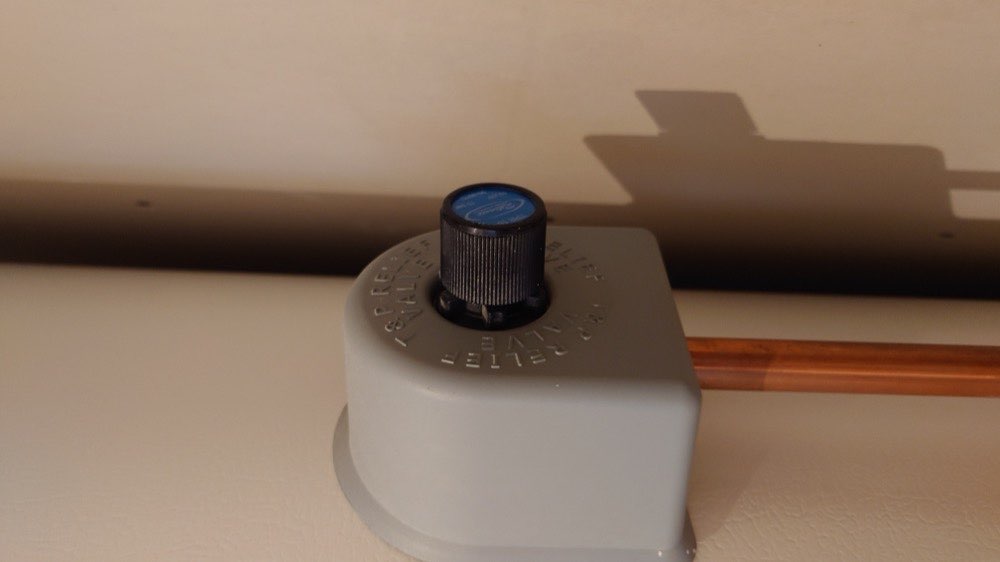
Temperature & pressure relief valve on a Heatrae Sadia cylinder - a common source of tundish discharge issues
Diagnostic Confirmation
- Visually inspect the valve for signs of damage or leakage
- Check for scale buildup on valve components
- Test thermostat settings and operation
- Verify correct system pressure
Repair Process
- For scale buildup: Descale the valve seat or replace if heavily scaled
- For faulty valve: Replace entire T&P valve assembly with matching specification
- For thermostat issues: Repair or replace thermostat to prevent overheating
- Test operation of new components and ensure proper discharge pipe installation
Expert Knowledge: The Megaflo Advantage
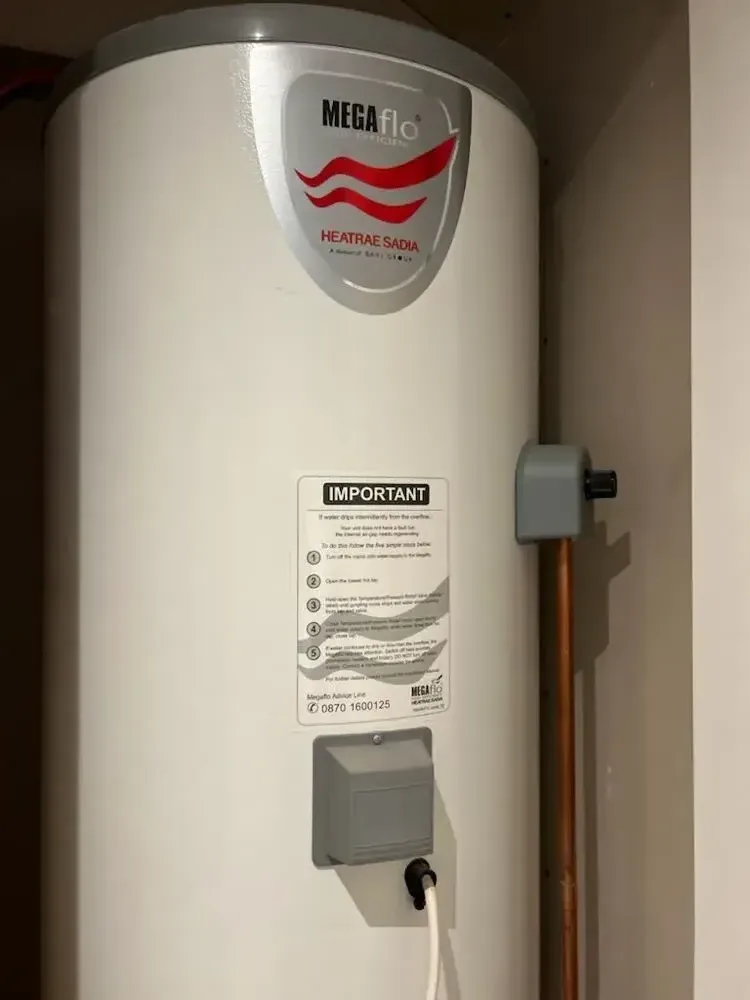
Heatrae Sadia Megaflo cylinders incorporate several design features that aid in repair and maintenance:
- Accessible service connections that simplify component replacement
- Removable inspection panels on newer models
- Compatible with standard replacement parts available in our Exeter service vans
- Comprehensive wiring diagrams visible inside the terminal cover
- Clear flow and return markings that prevent incorrect connections during repair
Preventive Maintenance to Avoid Tundish Discharge Problems
Proper maintenance of your Heatrae Sadia unvented hot water cylinder can significantly reduce the likelihood of tundish discharge problems. I recommend the following preventive measures:
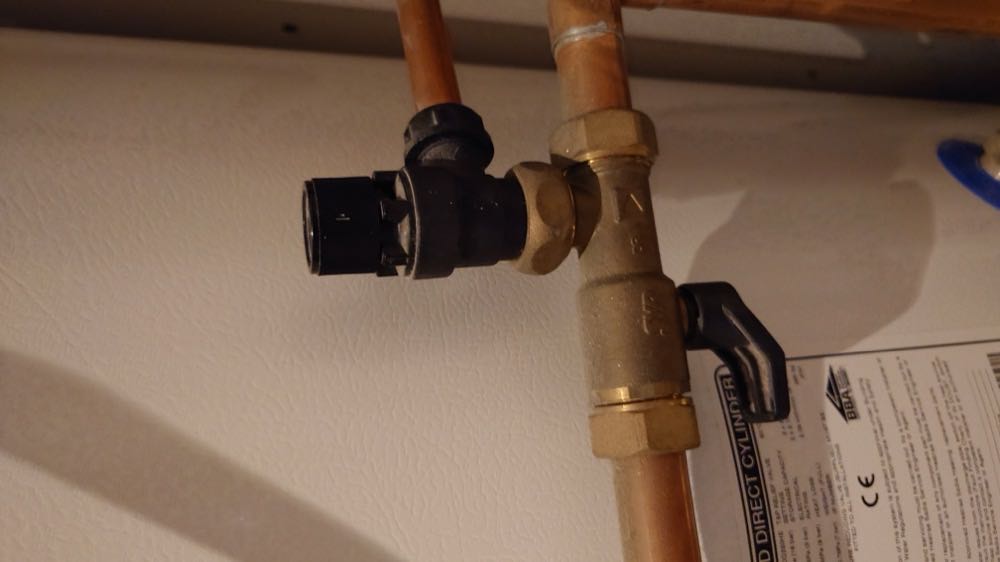
Our G3 qualified engineer servicing a Heatrae Sadia hot water cylinder in Exeter
Annual Professional Servicing
An annual service by a qualified G3 engineer should include:
- Checking and re-pressurizing the expansion vessel
- Testing all safety valves
- Inspecting the anode (if fitted) for corrosion
- Checking thermostat operation and temperature settings
- Visual inspection of all connections and components
- Testing pressure at various points in the system
Water Treatment Solutions
Particularly important in Devon's harder water areas:
- Installation of scale inhibitors or water softeners
- Use of magnetic scale reducers on incoming water supply
- Periodic system flushing to remove sediment buildup
- Chemical treatments to prevent corrosion and scale
Homeowner Maintenance Tips
Monthly Checks
- Visual inspection of the tundish for signs of water
- Listen for unusual noises from the system
- Check for leaks around connections
- Monitor water temperature consistency
Operational Best Practices
- Avoid extreme temperature settings (60-65°C is ideal)
- If away for extended periods, consider turning the system off
- Maintain consistent usage patterns when possible
- Keep service records and manufacturer documentation accessible
When to Call a Professional
While regular monitoring is valuable, contact Absolute Plumbing & Heating immediately if you notice:
- Any continuous discharge from the tundish
- Hot water from the tundish (indicates potential overheating)
- Inconsistent hot water temperature
- Unusual noises from the cylinder
- Visible leaks from any part of the system
- Error codes on digital control panels (for newer models)
Trust Exeter's Expert Technicians for Your Heatrae Sadia Cylinder Issues
Addressing tundish discharge problems promptly and correctly is crucial for maintaining the safety and efficiency of your unvented hot water system. At Absolute Plumbing & Heating, our G3 qualified technicians bring specialized experience with Heatrae Sadia systems throughout Exeter and Devon.
Whether you're experiencing continuous discharge, intermittent leaks, or simply want to ensure your system is operating efficiently, I provide diagnosis, repair and maintenance services. Our vans are fully stocked with genuine Heatrae Sadia parts, ensuring quick and reliable repairs.
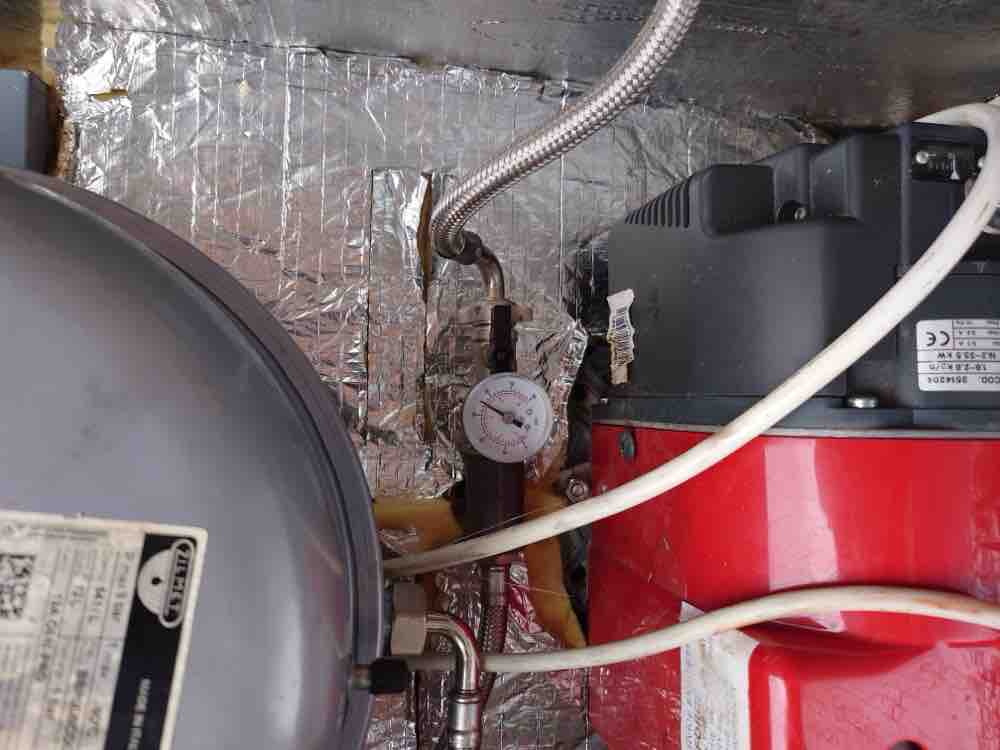
More Than Just Hot Water Systems
I also work on oil boilers and general plumbing, with gas work carried out by P Harman, Gas Safe registered. Whether you need hot water cylinder repairs or complete heating system maintenance, I can handle it all with the same level of expertise and professionalism.
Contact Our Exeter Plumbing Specialists
Don't let a minor tundish discharge develop into a major problem. Call me for a prompt, professional service throughout Devon.